
I still remember a conversation I had with a freelance friend a few years ago. He wasn’t a programmer, didn’t have a computer science degree, and honestly wasn’t even that interested in tech. Yet he was earning more every month than many full-time employees. His secret? He learned a few AI skills that businesses were willing to pay for.
That’s what inspired me to put together this list of 50 high-income AI skills designed specifically to generate revenue through freelance work, consulting, or online monetization. Some skills need technical knowledge. Others don’t. A few can even be learned over a couple of weekends. The biggest surprise for me was realizing that companies aren’t just paying for AI tools—they’re paying for people who know how to solve real problems with AI. And right now, that demand keeps growing.
Generative AI & Automation Monetization
A few years ago, most of these services didn’t even exist. Now I regularly see freelancers charging anywhere from a few hundred dollars to several thousand dollars for AI-related projects. The interesting part? Many of these skills don’t require a computer science degree. They require curiosity, practice, and a willingness to solve real business problems.
1. RAG Architecture Setup for Corporate Internal Knowledge Bases
RAG (Retrieval-Augmented Generation) sounds technical, but the idea is simple. I help companies connect their documents, manuals, and internal files to AI systems so employees can find answers instantly. Instead of digging through folders for hours, staff can ask questions and get accurate responses in seconds. Businesses happily pay for that time savings.
2. AI Voiceover Cloning for Localized Marketing Video Ads
I’ve seen businesses spend a fortune recording the same advertisement in different languages. AI voice cloning changes that. You can create realistic voiceovers and localize marketing videos for multiple regions without hiring separate voice actors each time. Small businesses love it because it’s faster, cheaper, and surprisingly effective.
3. No-Code AI App Building Using Tools Like Bubble and Make
Not everyone needs a custom software team. Sometimes a business just needs a simple AI-powered solution. Using Bubble, Make, and similar tools, I can build apps that automate tasks, collect customer data, or generate content. No heavy coding. Just practical solutions that solve everyday problems and generate income.
4. Custom GPT Creation for Resale on the OpenAI Store
Many people don’t realize businesses want specialized AI assistants. I’ve built GPTs focused on customer support, content writing, education, and niche industries. Once a useful GPT gains traction, it can become a digital product. Build it once, improve it occasionally, and keep earning from users who find value in it.
5. AI Automation Workflow Design Using Zapier to Eliminate Data Entry
Manual data entry is exhausting. I’ve watched teams waste entire afternoons copying information between spreadsheets and software tools. With Zapier and AI integrations, I automate those repetitive steps. Forms update databases automatically. Emails trigger actions instantly. Businesses save time, reduce mistakes, and often see an immediate return on investment.
6. AI Chatbot Configuration for Customer Support on Shopify Sites
Online store owners often struggle to answer customer questions around the clock. That’s where AI chatbots come in. I configure chatbots that handle order tracking, product recommendations, return policies, and common support requests. Customers get quick answers, store owners get fewer support tickets, and everyone wins.
7. Semantic Search Integration to Boost E-commerce Conversion Rates
Traditional website search can be frustrating. A customer searches for one thing and gets completely irrelevant results. Semantic search understands meaning instead of matching exact keywords. When I integrate it into an e-commerce store, shoppers find products faster, stay longer, and usually buy more. That’s why companies invest in it.
8. Synthetic Data Generation for Training Niche Corporate Algorithms
Many companies don’t have enough quality data to train AI systems properly. Collecting real-world data can be expensive or restricted by privacy rules. Synthetic data offers another path. I create realistic artificial datasets that help businesses test models, train algorithms, and improve performance without exposing sensitive information.
9. AI Agent Orchestrations to Handle Autonomous Social Media Management
Managing social media every day can become overwhelming. AI agents can help schedule posts, generate captions, monitor engagement, and even suggest content ideas. I design workflows where multiple AI agents work together behind the scenes. The result feels almost like having a small marketing team operating around the clock.
10. Vector Database Indexing for Companies Scaling Their Search Tools
When businesses accumulate thousands of documents, normal databases often struggle with intelligent search. That’s where vector databases become useful. I organize and index information so AI systems can retrieve relevant content quickly. It’s not the most glamorous service, but companies building AI products often pay very well for it.
11. Prompt Template Engineering for Specialized Copywriting Agencies
Good prompts save enormous amounts of time. I’ve seen agencies struggle because every writer uses different instructions. Creating prompt templates solves that problem. The outputs become more consistent, editing time drops, and teams work faster. Businesses serving large numbers of clients often find this service surprisingly valuable.
12. AI-Driven Personalization Setup for High-Volume Email Newsletters
Generic newsletters rarely perform well anymore. People expect relevant content. I help businesses use AI to personalize subject lines, recommendations, and email content based on subscriber behavior. Even small improvements in open rates and clicks can create significant revenue gains, which makes this skill highly profitable for freelancers and consultants.
Content & Creative Production
1. AI Programmatic SEO Writing to Scale Organic Blog Traffic
I still remember publishing blog posts one by one. It took forever. AI programmatic SEO changed that. It helps create hundreds or even thousands of useful pages around long-tail search topics. The real skill isn’t generating content—it’s finding search intent, organizing keywords, and making sure every page genuinely helps readers instead of flooding the internet with fluff.
2. Midjourney Prompt Engineering for Commercial Stock Photography Sales
Creating stock images with Midjourney feels a bit like directing a photo shoot without leaving your desk. I’ve seen simple prompts turn into images businesses actually buy. The trick is understanding lighting, composition, emotions, and market demand. Random prompts rarely sell. Well-crafted commercial concepts often do surprisingly well.
3. AI Video Translation and Lip-Syncing for Global Creators
A creator can now reach viewers in dozens of countries without filming the same video repeatedly. That’s powerful. AI translation and lip-sync tools make videos feel local to different audiences. The best part? Viewers hear content in their own language, and the creator’s voice and expressions still feel natural.
4. Short-Form Video Editing Automation Using OpusClip or Descript
Short videos dominate attention spans. I’ve watched creators spend hours trimming clips manually, only to realize automation tools could do most of the heavy lifting. OpusClip and Descript can find highlights, generate captions, and create shareable clips quickly. Less editing stress. More time spent creating content that matters.
5. AI Music Generation for Royalty-Free Background Audio Tracks
Finding background music used to be frustrating. Either it was expensive or overused. AI music generators solve that problem by creating unique tracks for videos, podcasts, and advertisements. The skill isn’t pressing a button. It’s knowing what mood, tempo, and style fit the story you’re trying to tell.
6. Deepfake Detection Consulting for Media and Security Firms
As AI-generated videos become more realistic, spotting fake content is getting harder. I’ve seen clips that looked completely real at first glance. Deepfake detection consultants help companies verify authenticity before misinformation spreads. It’s part technology, part investigation, and honestly, it’s becoming more valuable every single year.
7. AI Scriptwriting Optimization for YouTube and TikTok Channels
Great content starts with a strong script. AI can suggest hooks, improve pacing, and identify weak sections before recording begins. Still, human creativity leads the process. The goal isn’t replacing creators. It’s helping them keep viewers engaged from the first few seconds all the way to the final frame.
8. AI Podcast Mastering for Automated Noise Removal and Mixing
Podcast listeners notice bad audio immediately. A noisy background or uneven volume can make people leave within minutes. AI mastering tools clean recordings, balance sound levels, and remove distractions automatically. What once required expensive audio engineers can now be handled much faster while still sounding professional.
9. Automated Presentation Building for Venture Capital Pitch Decks
Building investor presentations used to consume entire weekends for many founders. I’ve been there. AI presentation tools can organize ideas, design slides, and create visuals in a fraction of the time. The technology saves effort, but the founder’s story, numbers, and vision still need to shine through.
Enterprise Consulting & Optimization
1. Fine-Tuning Open-Source LLMs to Reduce API Subscription Costs
I’ve seen companies spend thousands every month on AI API calls without realizing there are cheaper options. Fine-tuning open-source LLMs can cut those costs dramatically. Instead of paying for every request, businesses train models on their own data and run them efficiently. The savings often surprise leadership teams.
2. AI Implementation Auditing to Find Operational Corporate Inefficiencies
A lot of businesses add AI tools and expect instant results. It rarely works that way. I usually start by auditing existing workflows, checking where teams lose time, repeat tasks, or create bottlenecks. Small fixes often uncover bigger opportunities. Sometimes the problem isn’t the AI—it’s the process around it.
3. Prompt Injection Testing to Secure Company User Interfaces
I remember testing a chatbot that looked secure until a simple prompt bypassed its restrictions. That’s why prompt injection testing matters. I intentionally try to break AI systems, uncover weaknesses, and document risks before attackers find them. A few hours of testing can prevent serious security headaches later.
4. LLM Token Cost Optimization Using Semantic Caching Strategies
Many companies focus on model quality but ignore token expenses. Those costs add up fast. I use semantic caching strategies to store and reuse similar responses instead of generating them repeatedly. Users still get quick answers, while businesses reduce AI spending. It’s one of those behind-the-scenes improvements people appreciate later.
5. AI Vendor Evaluation for Non-Technical Executive Teams
Choosing an AI vendor can feel overwhelming when every sales pitch sounds amazing. I’ve helped leadership teams compare vendors using practical criteria instead of marketing promises. We look at cost, security, scalability, support, and long-term value. Clear comparisons make decision-making easier and help avoid expensive mistakes.
6. Corporate AI Policy Writing for Legal Compliance and Governance
When employees start using AI without guidelines, confusion usually follows. I’ve worked with organizations to create AI policies that people can actually understand and follow. Good policies cover data privacy, acceptable usage, compliance requirements, and accountability. They reduce risk while giving teams confidence to use AI responsibly.
7. Local LLM Deployment On-Premise for Highly Sensitive Industries
Some industries simply can’t send sensitive information to external AI providers. Healthcare, finance, and government teams often face this challenge. I help deploy local LLMs on-premise so data stays inside company infrastructure. It takes planning and careful setup, but the added control and privacy are worth it.
8. AI Training Workshop Delivery for Upskilling Traditional Workforce Teams
One thing I’ve learned is that people don’t resist AI because they dislike technology. Most are just unsure where to start. During AI training workshops, I focus on real tasks employees handle every day. Once they see practical results, confidence grows quickly and adoption becomes much smoother.
Technical Engineering & Freelancing
1. LangChain Backend Development for Custom Web Application Software
I’ve noticed many businesses want AI features but don’t know how to connect everything behind the scenes. That’s where LangChain backend development comes in. I build workflows that connect large language models with databases, APIs, and business tools. The result feels smooth for users while solving real problems automatically.
2. Computer Vision Implementation for Automated Factory Quality Control
Factories often lose money because defective products slip through manual checks. I’ve seen computer vision systems catch tiny flaws that human eyes miss after long shifts. Cameras continuously inspect products, compare them against quality standards, and flag issues instantly. It saves time, reduces waste, and improves consistency.
3. YOLO Object Detection Setup for Retail Security Systems
Retail stores deal with theft, misplaced products, and security concerns every day. I use YOLO object detection to identify people, products, and unusual activities from camera feeds in real time. The system reacts quickly and helps security teams focus on actual risks instead of endless monitoring.
4. Predictive Churn Modeling for Subscription-Based SaaS Applications
Losing customers hurts more than most companies realize. I’ve worked on predictive churn models that analyze user behavior, login frequency, support tickets, and subscription history. The goal is simple—spot unhappy customers before they leave. Businesses can then take action early and improve customer retention rates.
5. AI-Powered Fraud Detection Scripts for Fintech Platform Security
Fraudsters rarely follow predictable patterns. That’s what makes this work interesting. AI-powered fraud detection scripts examine transactions, account behavior, and spending trends to identify suspicious activity. Instead of waiting for damage to happen, companies can stop fraudulent actions early and protect customer trust.
6. Lead Scoring Algorithm Building for High-Ticket B2B Sales
Not every lead deserves the same attention. I build lead scoring algorithms that rank prospects based on engagement, company size, buying signals, and behavior. Sales teams stop wasting time chasing weak opportunities. Instead, they focus their energy on prospects who are actually likely to convert.
7. Sentiment Analysis Pipeline Setup for Brand Reputation Monitoring
People talk about brands everywhere—social media, reviews, forums, and comment sections. I create sentiment analysis pipelines that collect and analyze those conversations automatically. Positive, negative, and neutral opinions become easier to track. Businesses get a clearer picture of what customers truly think about them.
8. Time-Series Forecasting for Retail Inventory and Supply Chains
Running out of stock is frustrating. Overstocking isn’t great either. Time-series forecasting helps retailers predict future demand using historical sales data, seasonal trends, and market patterns. I’ve seen businesses reduce inventory headaches significantly by making smarter purchasing decisions based on reliable forecasts instead of guesses.
9. OCR Data Extraction from Massive Stacks of Legal PDF Documents
Anyone who has handled thousands of PDF files knows how exhausting manual data entry can be. OCR data extraction converts scanned legal documents into searchable, structured information. What used to take weeks can often be completed in hours. It’s a huge productivity boost for legal teams.
10. Recommendation Engine Building for Niche Streaming or Shopping Sites
The best recommendation systems feel almost personal. I build recommendation engines that study user behavior, viewing history, purchases, and preferences. When done well, customers discover content or products they genuinely enjoy. Businesses benefit too because engagement, retention, and sales often increase naturally over time.
Micro-Tasks & High-Value Niches
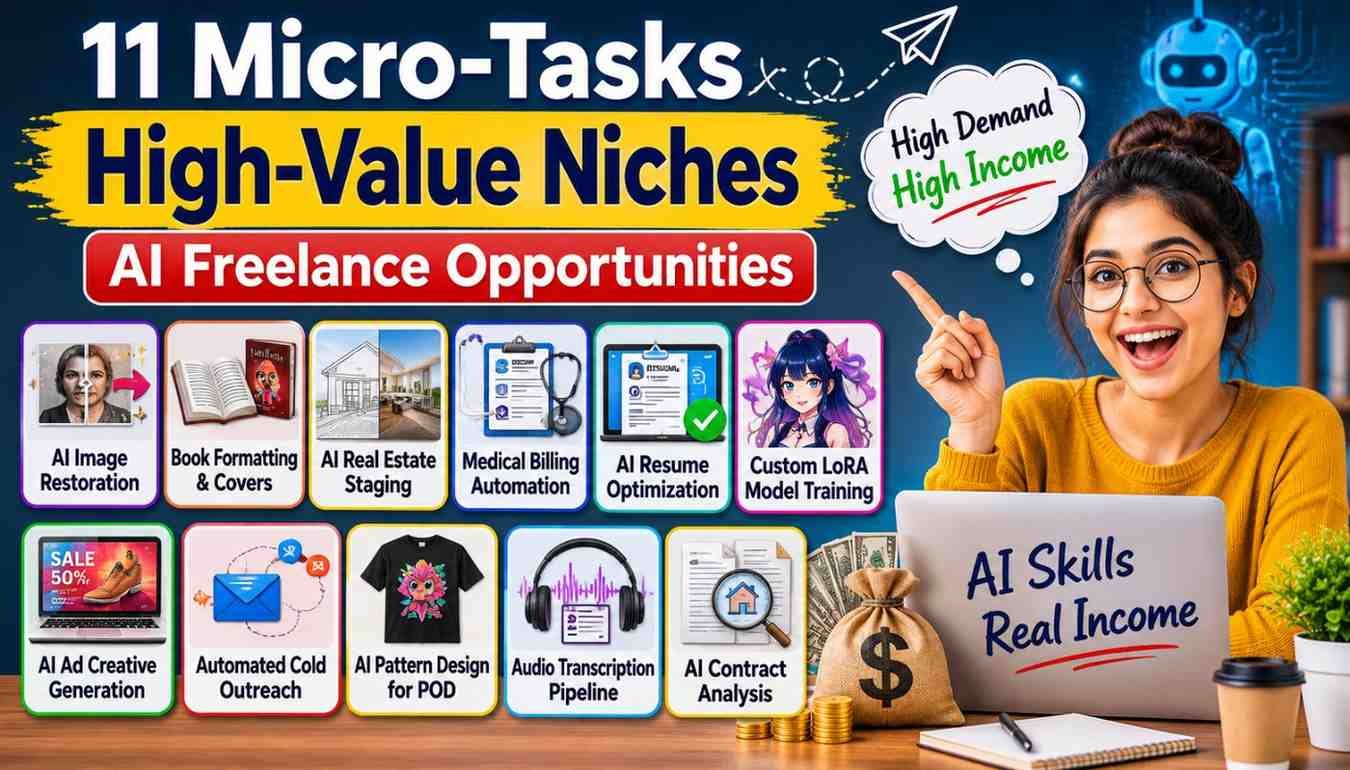
A few years ago, most people thought freelancing meant writing articles, designing logos, or managing social media accounts. That still works, sure. But the highest-paying opportunities I’ve seen lately often come from very specific micro-tasks that solve expensive business problems. Businesses don’t really care how complex the work looks. They care about results.
That’s where these high-value niches stand out.
Other than this, do you want to learn AI Developing Programming skills, Then learn These AI Skills which you can use to create AI machines.
1. AI Image Upscaling and Restoration Services for Historical Archives
Old photos tell stories. The problem is that many of them are damaged, faded, blurry, or stored in poor condition.
I’ve seen museums, local history groups, and even families pay good money to restore photographs that looked almost unusable. Modern AI tools can sharpen faces, repair scratches, improve resolution, and bring back details that were difficult to see before.
The real value isn’t the software itself. It’s knowing how to clean the image properly, check for mistakes, and deliver a version that still feels authentic. Historical archives, genealogy researchers, and publishing companies are constantly looking for this kind of help.
2. Automated Book Formatting and Cover Generation for Amazon KDP
Many first-time authors spend months writing a book and then get stuck at the publishing stage.
Formatting chapters, margins, page numbers, and creating a professional cover can feel overwhelming. That’s where automated book formatting and AI-assisted cover design become valuable services.
I know several self-published authors who happily pay someone else to handle the technical side because they simply want their book online as quickly as possible. Once you build a repeatable workflow, you can complete projects much faster while helping authors launch their books with confidence.
3. AI Real Estate Staging Using Virtual Interior Design Software
Empty homes can feel cold.
Buyers often struggle to imagine how a vacant room might look once it’s furnished. Virtual staging solves that problem. AI-powered interior design tools can add furniture, décor, lighting, and styling to empty property photos within hours.
Real estate agents love this because professionally staged images often attract more attention online. Instead of renting physical furniture, they can showcase multiple room styles digitally and save a significant amount of money.
4. Medical Billing Automation Coding for Private Healthcare Clinics
This isn’t the flashiest niche on the list. Yet it can be one of the most profitable.
Small healthcare clinics process thousands of billing records, insurance claims, and patient codes every month. Even minor mistakes can delay payments.
By helping clinics automate repetitive billing tasks, validate codes, and reduce manual entry, you can save staff hours every week. Healthcare providers don’t usually care about fancy technology buzzwords. They care about getting paid faster and reducing paperwork headaches.
5. AI Resume Optimization Writing for Executive Job Seekers
Executive-level professionals face a different challenge than most job seekers.
They’re often competing for positions worth six figures or more. A weak resume can cost them opportunities before an interview even happens.
AI tools can help identify missing keywords, improve structure, and align resumes with applicant tracking systems. Still, human judgment matters. I think the strongest resumes combine AI analysis with real storytelling about achievements, leadership experience, and business impact.
That’s the part clients are willing to pay for.
6. Custom LoRA Model Training for Specific Fashion or Character Designs
Custom LoRA model training sounds technical, but the demand is growing fast.
Fashion brands, digital artists, game creators, and content studios often want AI models trained on a very specific visual style. Maybe it’s a clothing collection. Maybe it’s a comic character. Maybe it’s an entire design language unique to their brand.
Instead of generating generic images, these customized models create artwork that closely matches a client’s vision. Businesses value consistency, and that’s exactly what custom LoRA models provide.
7. AI Ad Creative Generation Using AdCreative.ai for Drop-Shippers
Most drop-shipping stores fail for one simple reason.
Their ads don’t grab attention.
Store owners test dozens of headlines, images, and ad variations every week. Creating those manually takes time. AI platforms such as AdCreative.ai speed up the process by generating multiple creative options quickly.
A skilled freelancer can combine AI-generated concepts with marketing knowledge, helping store owners discover which ads deserve real advertising budgets. Better ads often mean more sales, and clients notice that immediately.
8. Automated Cold Outreach Script Writing for Agency Business Development
Cold outreach still works. Poor cold outreach doesn’t.
Many agencies need a steady flow of leads but don’t have time to write personalized messages at scale. That’s why automated outreach systems have become so popular.
The goal isn’t sending thousands of generic emails. The goal is creating smart templates that feel personal while remaining efficient. When an agency starts booking more calls because of a better outreach sequence, your service becomes extremely valuable.
9. AI Pattern Design Generation for Print-on-Demand Merchandise Lines
Walk into any online marketplace and you’ll see thousands of shirts, mugs, phone cases, and tote bags.
Most designs blend together.
AI pattern generation allows creators to produce unique artwork for print-on-demand products much faster than traditional design methods. I’ve noticed that sellers who focus on niche audiences often perform best because their designs feel more targeted and less generic.
Businesses constantly need fresh design ideas. That’s what keeps demand moving in this space.
10. Audio Transcription Pipeline Creation for Legal Court Reporters
Legal professionals deal with massive amounts of audio.
Court hearings, witness interviews, depositions, and legal recordings generate hours of spoken content that must be converted into accurate text.
Building an audio transcription pipeline can dramatically reduce manual work. AI handles the first draft, while human review ensures accuracy. For court reporters and legal firms, faster turnaround times can directly affect productivity and client satisfaction.
Recently, I have seen a conference in which demonstrated that Indian Home makers earning money with AI skills.
11. AI Contract Analysis Setup for Rapid Real Estate Document Review
Real estate transactions involve mountains of paperwork.
Purchase agreements, disclosures, lease contracts, financing documents—the list goes on. Reviewing every document manually takes time and increases the chance of overlooking important details.
AI contract analysis tools can help flag clauses, identify missing information, and organize documents for quicker review. Real estate professionals still make the final decisions, but the technology helps them move faster and focus on higher-level work.
What stands out to me about this niche is simple: every saved hour has real financial value. That’s why businesses are willing to invest in solutions that make document review easier.
The biggest lesson I’ve learned from these micro-tasks is that specialization wins. General services face endless competition. Specialized services solve expensive problems. And when you solve expensive problems, clients usually don’t ask whether the task took you one hour or ten. They care that the problem disappeared.
