
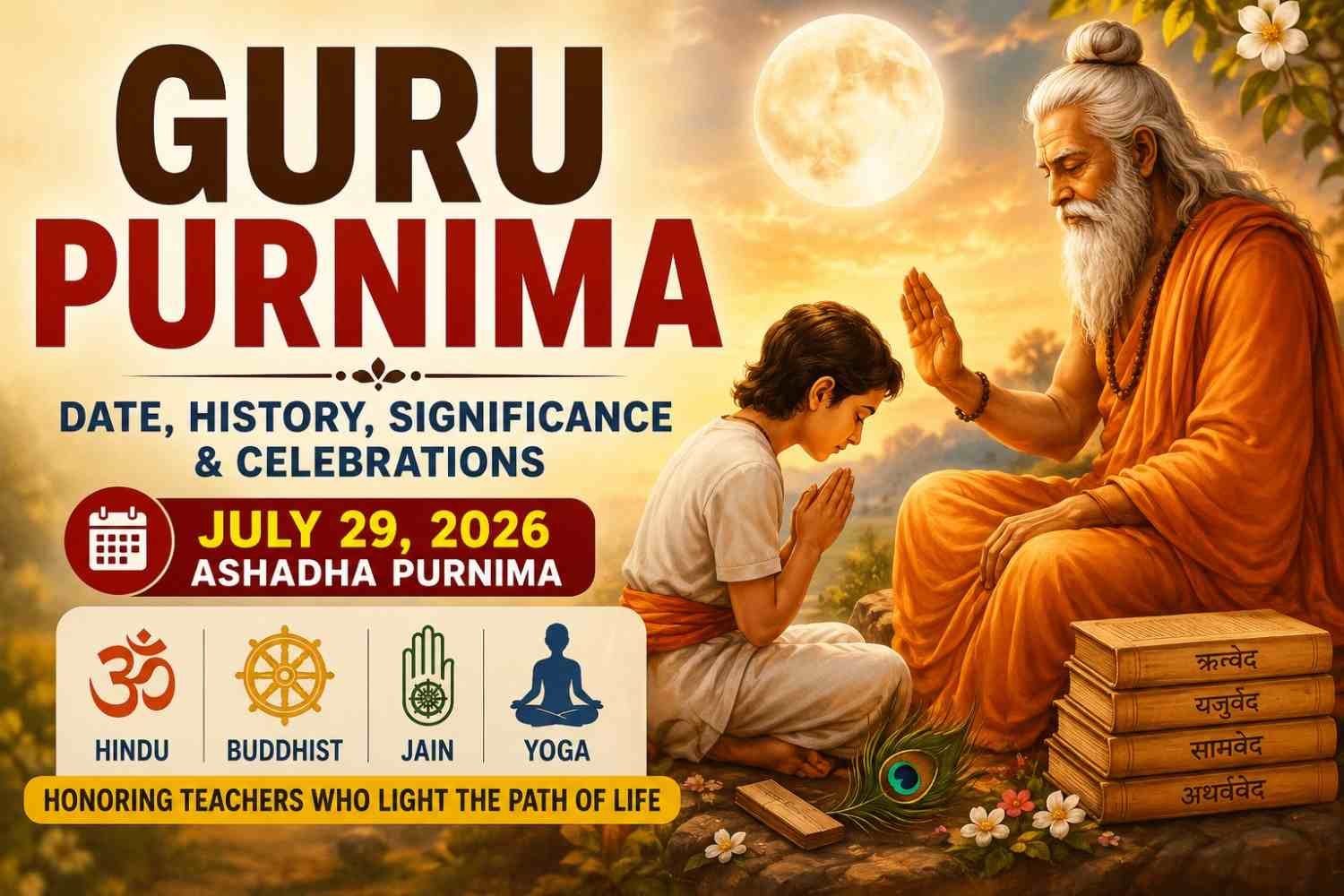
Guru Purnima is being celebrated across India today, Wednesday, July 29, 2026. The festival is also observed by many Hindu, Buddhist and Jain communities around the world. It falls on the full moon day (Purnima) of the Hindu month of Ashadha, which usually comes in June or July. More than just a festival, Guru Purnima is a heartfelt occasion to express gratitude to the people who have guided us in life—our teachers, spiritual gurus, parents, mentors and elders. According to the Panchang for New Delhi, the Ashadha Purnima Tithi began at 6:18 PM on Tuesday, July 28, and will end at 8:05 PM on Wednesday, July 29. Since these timings are based on local sunrise and astronomical calculations, they can vary slightly from one city to another. That’s why devotees are advised to check their local Panchang before performing any time-specific rituals or puja.
Guru Purnima is also widely known as Vyasa Purnima, as it honours Maharishi Veda Vyasa, one of India’s greatest sages. He is traditionally credited with organizing the Vedic knowledge into the four Vedas—Rig Veda, Yajur Veda, Sama Veda and Atharva Veda. He is also believed to have composed or compiled the Mahabharata and several Puranas. On this day, devotees remember his immense contribution by offering prayers, flowers, charity and sincere respect to their own teachers and spiritual guides. The festival holds special importance in Buddhism as well. According to Buddhist tradition, it was on the Ashadha full moon that Gautama Buddha delivered his first sermon after attaining enlightenment. He shared his teachings with five former companions at Sarnath, near Varanasi in Uttar Pradesh. This historic event, known as the “Turning of the Wheel of Dharma,” marked the beginning of the Buddhist Sangha. The day also marks the start of Vassa, the traditional three-month rainy-season retreat observed by Buddhist monks in many countries.
Guru Purnima is equally meaningful for the Jain community. Jain traditions associate the day with Lord Mahavira, who accepted Gautama Swami as his first chief disciple. Although the customs may differ across religions, the message remains the same—true knowledge should be gained with humility and shared with kindness. The festival is celebrated with great devotion in India and Nepal, while Hindu, Buddhist, Jain and yoga communities across the world also organise special events. In Nepal, Guru Purnima is widely celebrated as Teachers’ Day, where students thank their teachers with flowers, greeting cards and heartfelt wishes. Across India, temples, schools, colleges and spiritual organisations host prayer meetings, devotional singing, meditation sessions, scripture readings and Guru Puja ceremonies.
The word “Guru” comes from Sanskrit and simply means a teacher or guide. A popular traditional explanation describes “Gu” as darkness and “Ru” as the remover of darkness. While scholars consider this a symbolic interpretation, it beautifully reflects the role of a guru—someone who helps us find clarity and direction in life. There is no fixed way to celebrate Guru Purnima. Some people observe a fast, wake up early for prayers, clean their home temple, offer fruits and sweets, recite the Guru Gita, or seek blessings by touching the feet of their teachers. Others express their gratitude through a phone call, a message or a visit. Since local customs differ, Guru Purnima is not observed as a nationwide public holiday across India.
The beauty of Guru Purnima lies in its simplicity. You don’t need elaborate rituals to celebrate the day. A sincere “thank you” to a teacher, helping a student, donating books or simply remembering the people who shaped your life can be the most meaningful way to honour the occasion. Guru Purnima 2026 reminds us that no one succeeds alone. Every achievement has a teacher, mentor or guide behind it—someone who believed in us, corrected us, encouraged us and helped us become who we are today. This special day is a wonderful opportunity to thank those people and carry their wisdom forward in our own lives.
Read Next: Indian Diwali Festival.
Disclaimer: Festival timings may vary by location, so readers should confirm local panchang details before performing time-specific rituals.
